Project · PROJECT 009 · LR-009-A
Flat Renovation in Kensington
A full renovation of a two-bedroom period mansion-block apartment in Kensington, with new services, replastering, and a programme of bespoke fitted joinery.
During & Completed
Illustrative case study, shown to demonstrate the project format. To be replaced with a genuine completed project before launch.
The brief
A two-bedroom, two-bathroom apartment on the third floor of a late-Victorian mansion block, comprising approximately 78 square metres. The owner required a full renovation: strip back and replaster all rooms, install a new heating and hot-water system, rewire throughout, fit two new bathrooms, and complete the scheme with a programme of bespoke fitted joinery in the sitting room, study, and principal bedroom.
Works of this kind in a mansion block require early engagement with the building management company and adherence to the block’s licence conditions — something factored into the pre-contract programme from the first consultation. Our approach to flat renovation in managed buildings is described on the services page.
Existing condition
The apartment had not been renovated since the mid-1990s. The plasterwork was generally sound but showed hairline cracking consistent with the natural movement of a building of this age. Previous occupants had fitted a series of off-the-shelf wardrobes and storage units that were to be entirely removed.
The heating was supplied by a single electric panel heater in the hallway — entirely inadequate for the floor area. The bathroom and en-suite were functional but dated, with acrylic fittings and surface-mounted pipework. The electrical installation lacked a modern consumer unit and had no RCD protection.
The building’s fabric — solid brick walls, timber suspended floor, original timber windows — was in sound order. No structural work was required.
Construction work
The apartment was stripped back to structural walls and floor. The suspended timber floor was inspected, defective boards replaced, and the subfloor void cleared and re-ventilated before new flooring was laid.
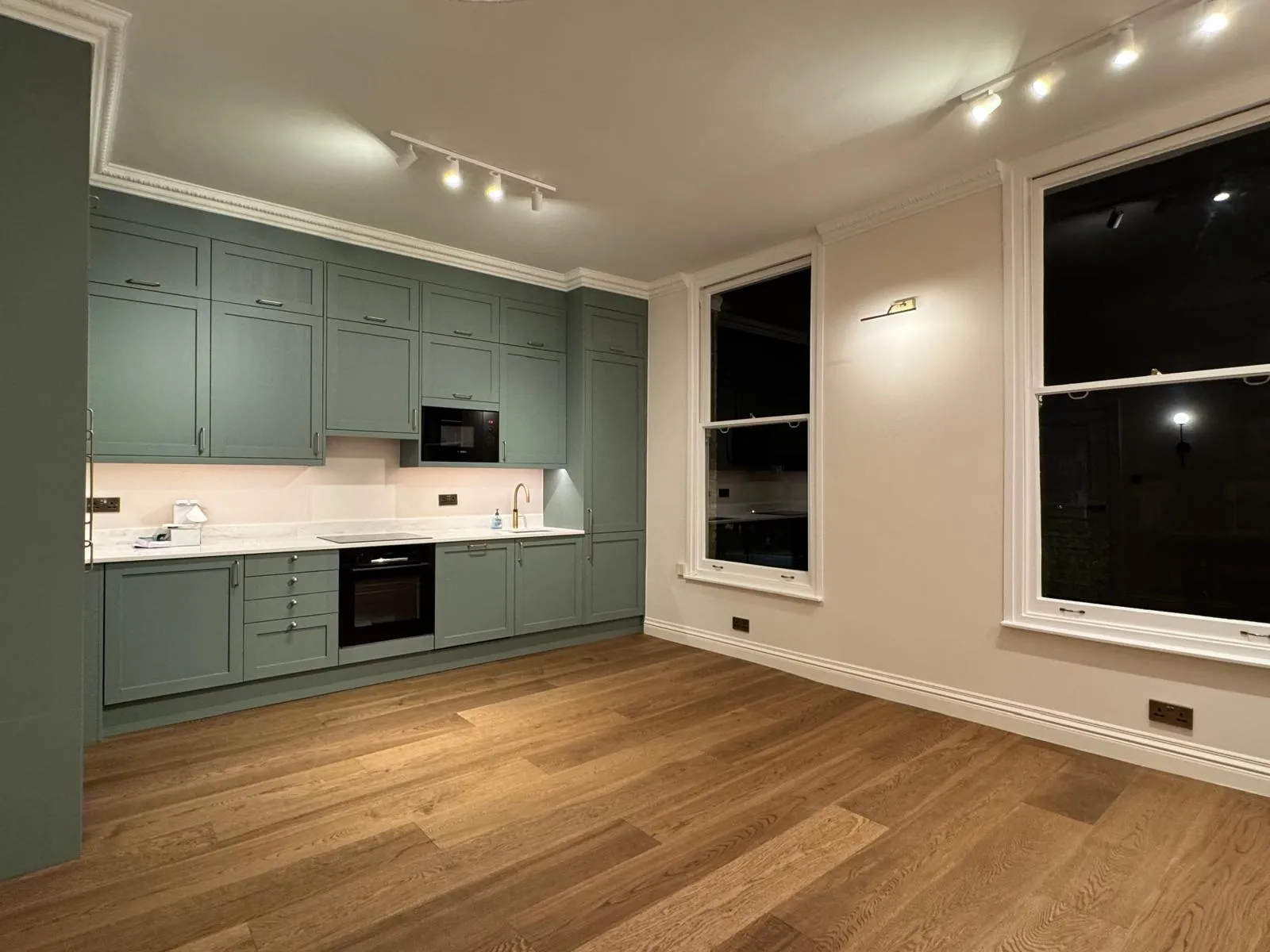
A new pressurised heating and hot-water system was installed, with the boiler located in a purpose-built housing within the kitchen. Radiators were positioned in all habitable rooms, sized to a heat-loss calculation. The full electrical installation was replaced: new consumer unit, ring mains, lighting circuits, and a dedicated circuit for an electric oven.
Walls were replastered in a two-coat system throughout. Ceilings were skimmed where sound and fully replastered where previous work had left them uneven. The cornicing running through the reception hallway and sitting room — original to the block — was repaired and cleaned.
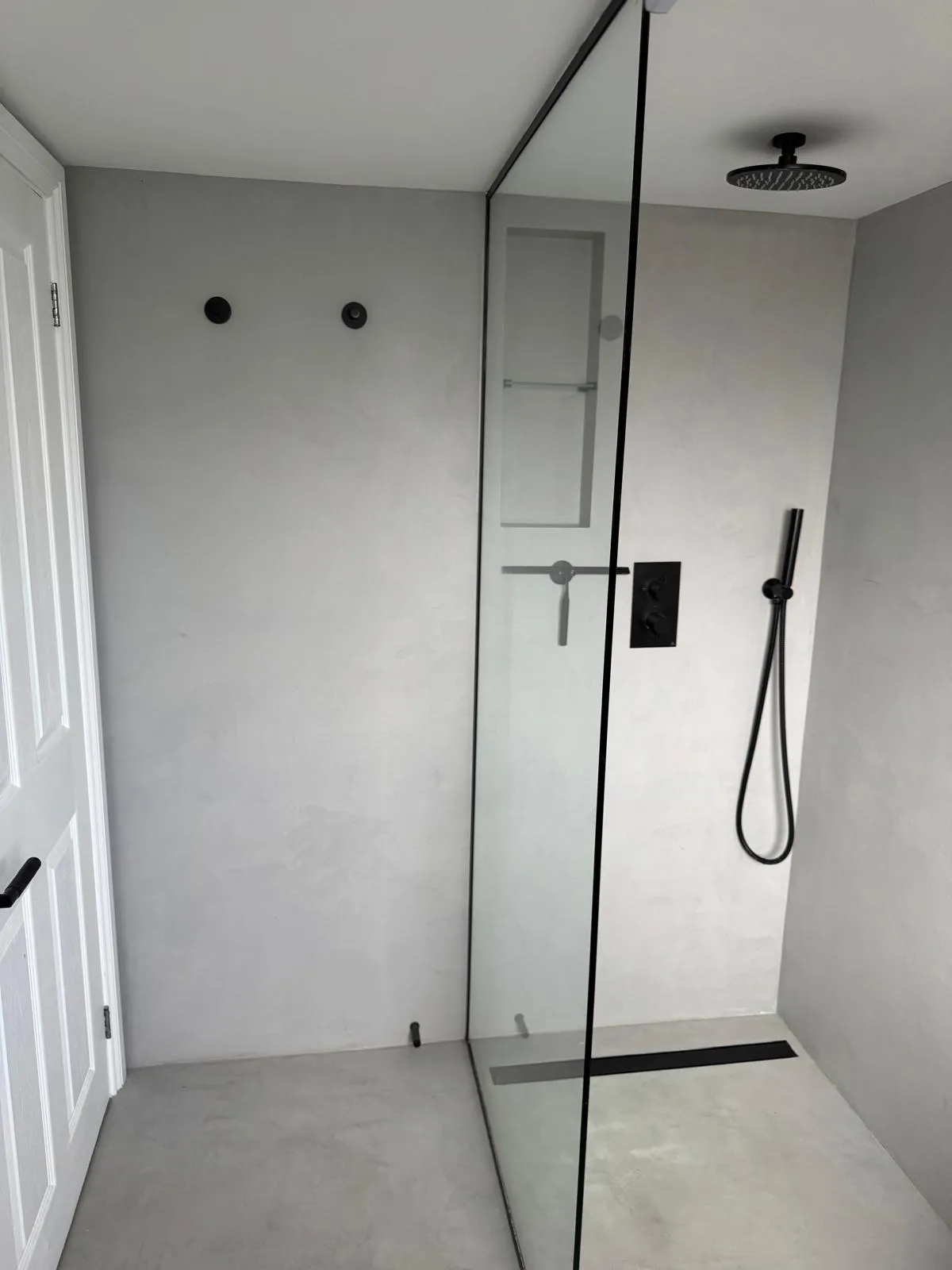
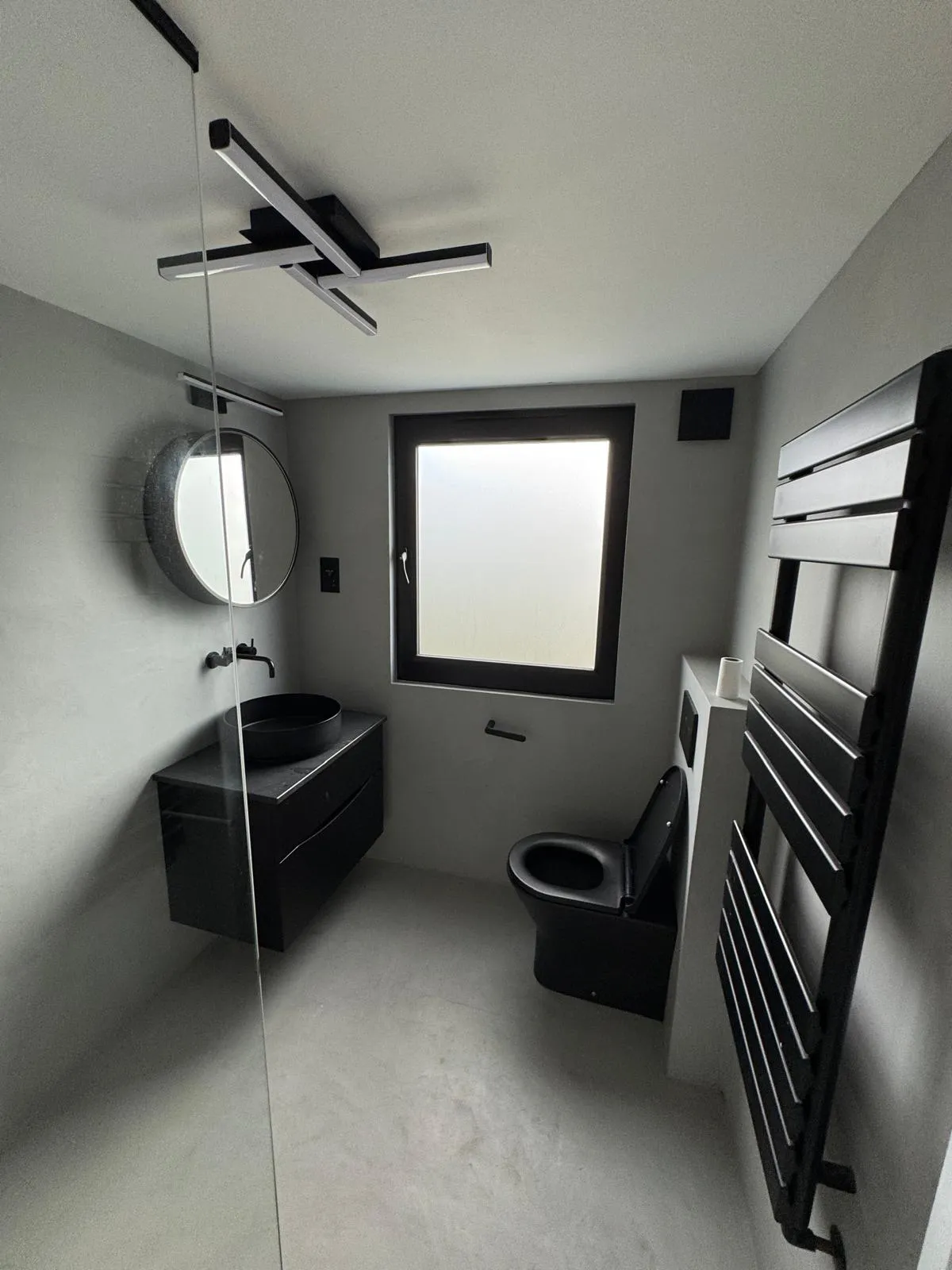
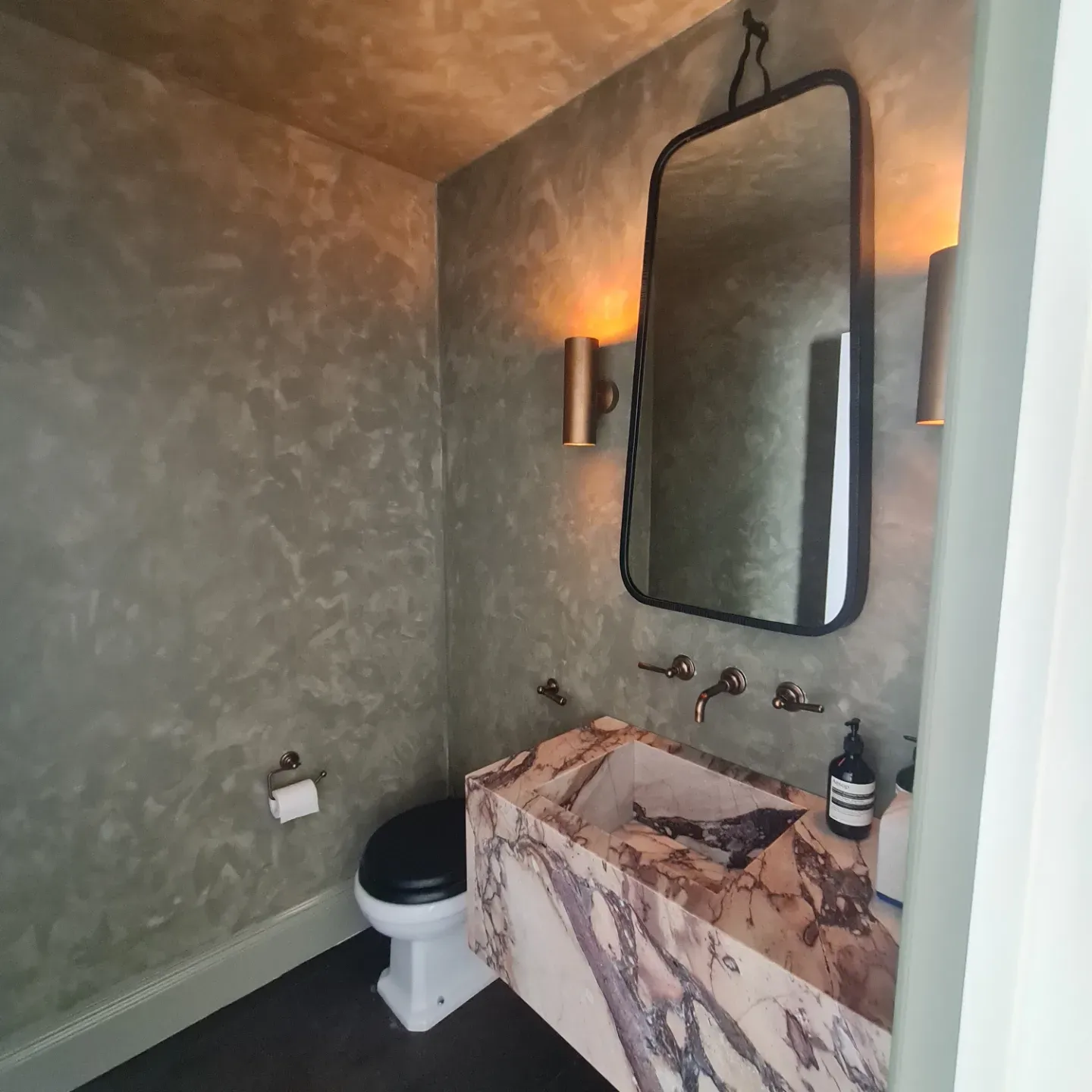
Both bathrooms were fitted with new sanitaryware, concealed-cistern WCs, and wet-room shower enclosures. Pipework was fully concealed within the wall construction, with access panels at meter and isolator locations only.
Challenges
Mansion block licensing. The building management company required a signed licence to alter before works could begin. Conditions included restricted working hours (Monday to Friday, 08:00–17:30), no use of a skip on the public highway, and mandatory dust sheeting to the common parts. The programme was built around these constraints; no variation requests were necessary.
Noise and vibration. Adjacent apartments were occupied during the works. All mechanical breaking-out was completed within the first two weeks and concentrated in morning hours. A noise log was maintained throughout and made available to the management company on request.
Services routing. Running new heating pipework and electrical conduits through a solid-brick-wall apartment without surface-mounted trunking required careful set-out. Chases were cut to structural drawings, confirmed by the building surveyor, and made good before plastering.
Ventilation. The block’s windows are not suitable for trickle ventilation inserts, and the management company did not permit penetrations through the external facade. Mechanical extract ventilation to the bathrooms and kitchen was routed through the existing soil vent pipe boxing, an approach agreed in writing with the building surveyor before works commenced.
Materials & craftsmanship
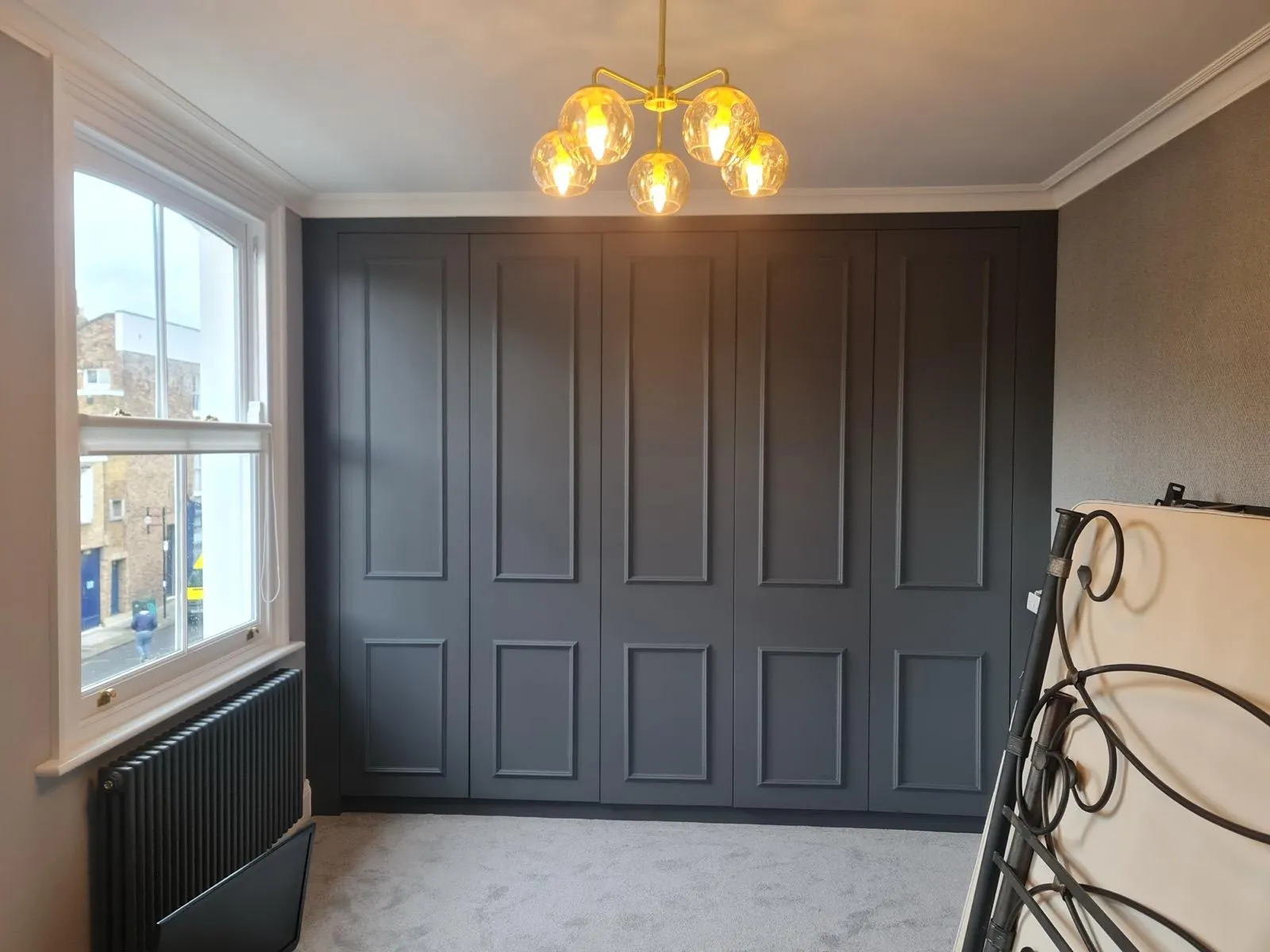
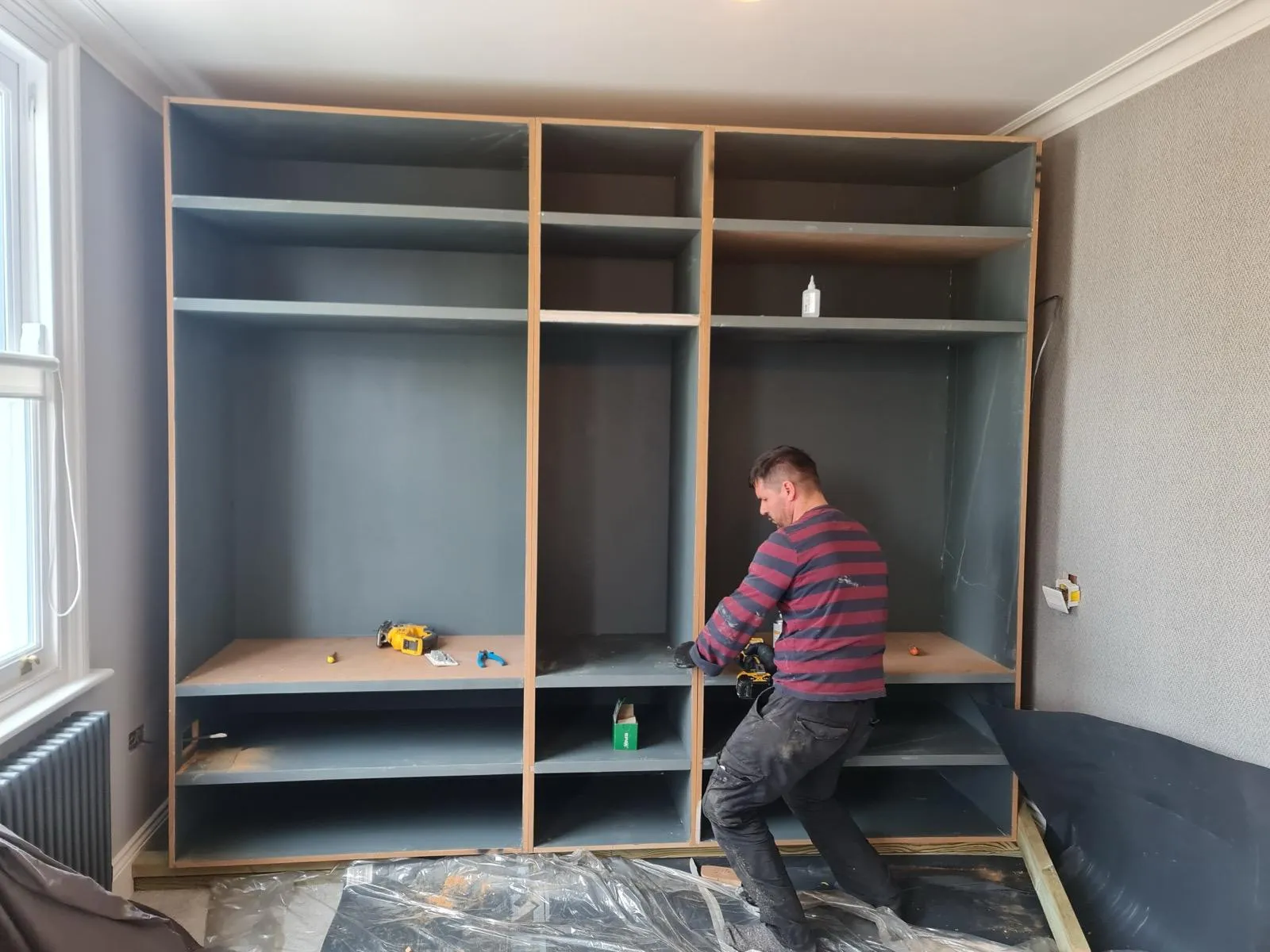
The joinery programme — built-in shelving and media unit in the sitting room, a fitted desk and bookcase in the study, and floor-to-ceiling wardrobe storage in the principal bedroom — was manufactured in our joinery workshop in painted MDF with solid-timber lipping and a two-pack paint finish in a warm off-white. Drawer runners are soft-close throughout; internal fittings in the wardrobes are in a natural oak veneer.
Bathroom tiling is a large-format rectified porcelain throughout, laid with a 2 mm joint. The principal bathroom features a freestanding bath positioned below the window, served by a floor-mounted filler. Brassware in both bathrooms is in a brushed chrome to harmonise with the wider palette.
Engineered oak flooring was laid throughout the living areas and bedrooms, fixed to the existing timber subfloor and finished with a hardwax oil. Thresholds at room junctions were formed in a solid-oak section to match.
Result
The apartment is thoroughly renewed: the structure is unchanged, the original architectural features are intact, and the services now meet current standards. The bespoke joinery provides storage and definition in rooms that were previously under-furnished. The programme completed within the 18-week allowance.
Costs and what to expect at each stage are covered on the renovation costs and renovation process pages. To discuss a flat renovation in a managed building, please contact us.
Selected Detail
Initial Consultation
Planning works to your London property?
Tell us about the property, the proposed work and your preferred timescale. We will review the information and arrange an initial conversation where the project appears suitable.