Construction
Home Extensions in London
A well-designed extension adds usable floor area and alters how a home functions day to day — two outcomes that depend equally on good design, sound construction, and careful navigation of London's planning rules.
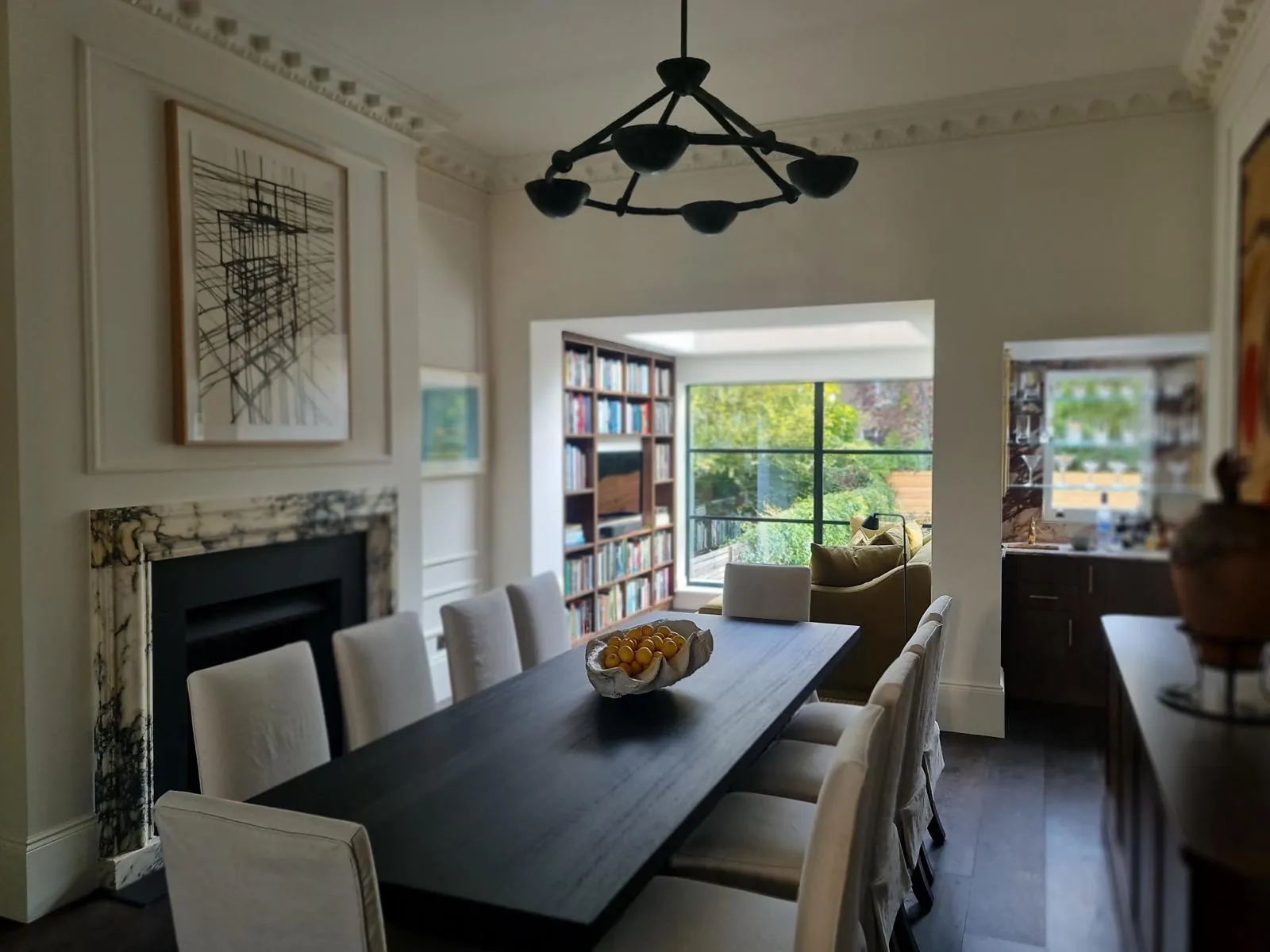
A home extension is one of the most significant investments a London homeowner can make. The potential returns — in usable space, in property value, in day-to-day liveability — are genuine, but so are the risks if the project is poorly planned or executed. The process involves planning consent or permitted development, party wall procedures, structural engineering, and detailed coordination of trades. Getting each of those elements right, in the right sequence, is what separates a sound result from an expensive problem.
London Renovation manages home extensions from initial feasibility through to snagging. We work across rear extensions, side-return infills, and wrap-around configurations, and we are experienced with the particular constraints of Victorian and Edwardian terraces, semi-detached properties, and period townhouses that make up most of London’s residential stock.
What this includes
- Feasibility assessment and advice on planning versus permitted development routes
- Coordination with architects and structural engineers (or introduction to trusted consultants if required)
- Planning application support and pre-application engagement with local authorities
- Party wall notice service and liaison with surveyors
- Groundworks, foundations, and structural frame (steel, timber, or masonry as appropriate)
- External envelope: brickwork, render, cladding, or mixed finishes to match or complement the existing property
- Flat and pitched roofing, including warm roof build-ups and associated waterproofing
- Roof glazing, skylights, and full-height glazed elements
- Internal fit-out to match the wider project or as a standalone scope
- Building control applications and sign-off
Common considerations
Planning and permitted development. Many single-storey rear extensions in London fall within permitted development, but Class Q conditions, Article 4 directions, and conservation area designations can remove that right entirely. We advise on the applicable route before any design work is committed to.
Party wall. In a terrace or semi-detached property, almost any extension will trigger the Party Wall etc. Act 1996. Notices need to be served in time — typically two months before work begins for party wall work proper. This is procedural, not contentious, but it cannot be rushed.
Head height and outlook. Rear extensions in London often involve excavating to lower finished floor levels or raising ceiling heights to recapture what older single-storey additions compress. These decisions affect both structural cost and planning acceptability.
Glazing and light. Side-return infills in particular can create long, narrow spaces if glazing to the rear is not handled carefully. Rooflights, glazed gables, and bifold or sliding door configurations all require considered positioning relative to the sun path and neighbouring properties.
Integration with the existing house. Structural openings between old and new fabric are almost always required. The condition of the existing structure — particularly lintels, padstones, and load paths — needs to be assessed before the opening design is fixed.
How we approach it
We begin every extension project with a conversation about how you use your home and what you expect the extension to change. From there we move through feasibility, design coordination, and programming — the full sequence is set out on our renovation process page.
Cost is addressed early and revisited at each stage. Extension costs in London vary considerably with specification, structural complexity, and the condition of the existing building. Our guide to renovation costs explains what drives pricing and how to read a contractor’s quotation.
We do not take on extensions as isolated shell-only contracts and then walk away. The internal finish, the connection to the existing rooms, and the final result matter as much as the structure.
Common questions
Do I need planning permission for a rear extension?
Not necessarily. Many single-storey rear extensions on houses in London can proceed under permitted development, subject to size limits, materials conditions, and the absence of Article 4 directions or conservation area restrictions. Two-storey extensions, extensions on flats, and extensions in conservation areas where Class Q is removed will require a full planning application. We assess this at the outset.
How long does a rear extension typically take to build?
Build programmes vary with size and specification, but a single-storey rear extension — assuming planning or permitted development is resolved beforehand — typically takes in the region of 12 to 20 weeks on site. Larger or more complex projects take longer. These are indicative timescales only; the programme for your project will be agreed once the scope is fixed.
What disruption should I expect if I stay in the property during the works?
Occupation during an extension build is possible, though it requires careful management of dust, noise, and security at the rear of the property. We discuss this at the planning stage and agree on practical measures — hoarding, temporary facilities, sequencing of trades — to make it workable. Some phases, particularly demolition and structural works, are more disruptive than others.
To discuss an extension project, including a preliminary view on feasibility and likely scope, get in touch with our team.
Initial Consultation
Planning works to your London property?
Tell us about the property, the proposed work and your preferred timescale. We will review the information and arrange an initial conversation where the project appears suitable.