Interiors
Bespoke Joinery in London
Bespoke joinery resolves the problems that off-the-shelf solutions cannot — irregular walls, awkward alcoves, ceiling heights that standard units never quite reach, and period interiors that require detailing to match what already exists.
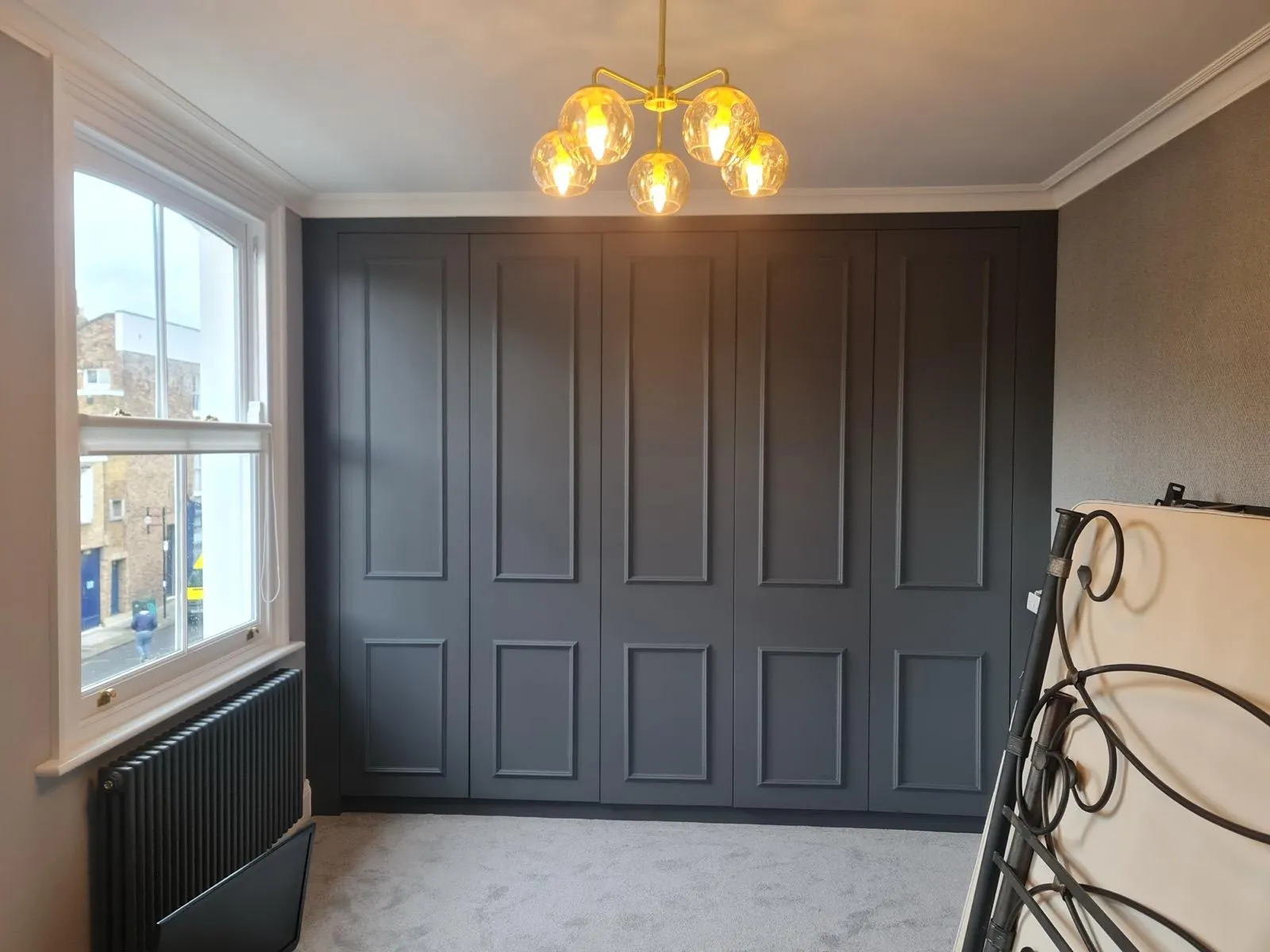
In a London property — whether a Georgian townhouse, a Victorian terrace, or a converted flat — the rooms rarely conform to the dimensions that proprietary furniture assumes. Ceilings are higher, walls are not square, alcoves are not the same width on each side, and the cornice that runs around the room creates a reveal that a standard unit cannot address without looking unfinished. Bespoke joinery exists to solve these problems precisely.
London Renovation commissions and manages bespoke joinery as part of renovation projects. We work with established workshops to produce fitted cabinetry, wardrobes, shelving, and panelling that is designed for the specific space and built from properly specified materials. The result is joinery that sits correctly in the room, operates correctly over time, and — in period properties — looks as though it belongs.
What this includes
- Measured survey of the space, including ceiling line, wall angles, and any features to be worked around or incorporated
- Design development in conjunction with the client and, where required, the architect or interior designer
- Workshop production in MDF, hardwood, or softwood as appropriate to the application
- Priming and painting in the workshop where this produces a better result than site-finishing
- Site installation, including scribing to walls, ceilings, and floors
- Hardware: hinges, drawer runners, handles, and push-to-open mechanisms selected for the application
- Site painting and finishing where required
Typical commissions include:
- Fitted wardrobes — floor-to-ceiling, alcove, and walk-in configurations; sliding or hinged doors; internal layouts to suit the use
- Alcove cabinetry — cupboards below with open shelving above, or full-height units; integrated into the room’s proportions rather than left as an afterthought
- Library and shelving walls — adjustable or fixed shelving with pilasters, plinths, and cornices that read as a single architectural element
- Kitchen joinery — island units, larder cabinets, and painted in-frame kitchens produced to the same standard as the rest of the house’s joinery
- Media and study joinery — desks, bookcases, and media units designed around the specific equipment and spatial requirements
- Panelling — half-height dado panelling, full-height board-and-batten, and raised-and-fielded panel configurations appropriate to the period of the property
Common considerations
Lead times. Quality joinery workshops operate to lead times of eight to sixteen weeks, depending on their current programme and the complexity of the commission. This needs to be factored into the renovation programme from early in the project, not added at the end when installation is imminent.
Painted versus polished finish. Most fitted joinery in London residential projects is painted, which allows the profile detailing to read clearly and makes refinishing straightforward. Painted joinery is typically primed in the workshop and finished on site after installation and filling. Where a polished or oiled timber finish is specified, the material selection and workshop process are different.
Scribing and fixing. Bespoke joinery is only as good as its installation. Scribing to walls that are out of plumb, setting out against floors that are not level, and fixing securely into wall construction that is not always predictable requires skill and patience. Poor installation of well-made joinery produces visible gaps, misaligned reveals, and doors that do not close correctly.
Period detailing. In older London properties, fitted joinery is expected to relate to the existing architecture — the cornice profile, the skirting height, the door architrave style. Where we are introducing new cabinetry into a period interior, we take reference from the existing details and match or complement them, rather than defaulting to a contemporary profile that sits at odds with the room.
How we approach it
We begin with a measured survey of the space and a detailed brief from the client. For projects that are part of a wider renovation, this happens early in the design process so that the joinery drawings can be issued to the workshop in time for the programme.
The full approach to managing trades and sequencing work is described on our renovation process page. For an indication of what bespoke joinery commissions typically cost, our renovation costs guide provides relevant context.
Common questions
What is the difference between bespoke and semi-bespoke joinery?
Bespoke joinery is produced from scratch to dimensions and profiles specified for the particular space. Semi-bespoke or modular fitted furniture uses standard carcass sizes that are selected and arranged to fit the space, with varying degrees of customisation available for doors, finishes, and hardware. Bespoke joinery is more expensive and takes longer to produce, but it is the appropriate choice where the room has non-standard dimensions, where period detailing needs to be matched, or where the design requires profiles and proportions that standard units cannot deliver.
Can bespoke joinery be painted to match existing woodwork?
Yes. We take colour references from the existing painted woodwork in the property and specify the same paint system and colour for the new joinery. Where the existing woodwork is in an older paint system that needs to be rationalised, we can advise on the appropriate preparation and finishing approach.
How is bespoke joinery fixed in a property with solid masonry walls?
Fixing into solid brick or stone walls requires appropriate plugging and fixings selected for the wall material. This is standard practice and does not present a problem, but it does require the installer to assess the wall type — which is done during the survey. In properties with very old or friable lime mortar, we may use a different fixing strategy than in a property with modern cement-pointed brickwork.
To discuss a bespoke joinery commission, including preliminary sketches and indicative costs, contact our team.
Initial Consultation
Planning works to your London property?
Tell us about the property, the proposed work and your preferred timescale. We will review the information and arrange an initial conversation where the project appears suitable.