Renovation
Townhouse Renovation in London
Renovating a London townhouse — typically four or more storeys across a narrow-fronted terrace — involves a level of logistical co-ordination that sets it apart from single-floor or two-storey projects.
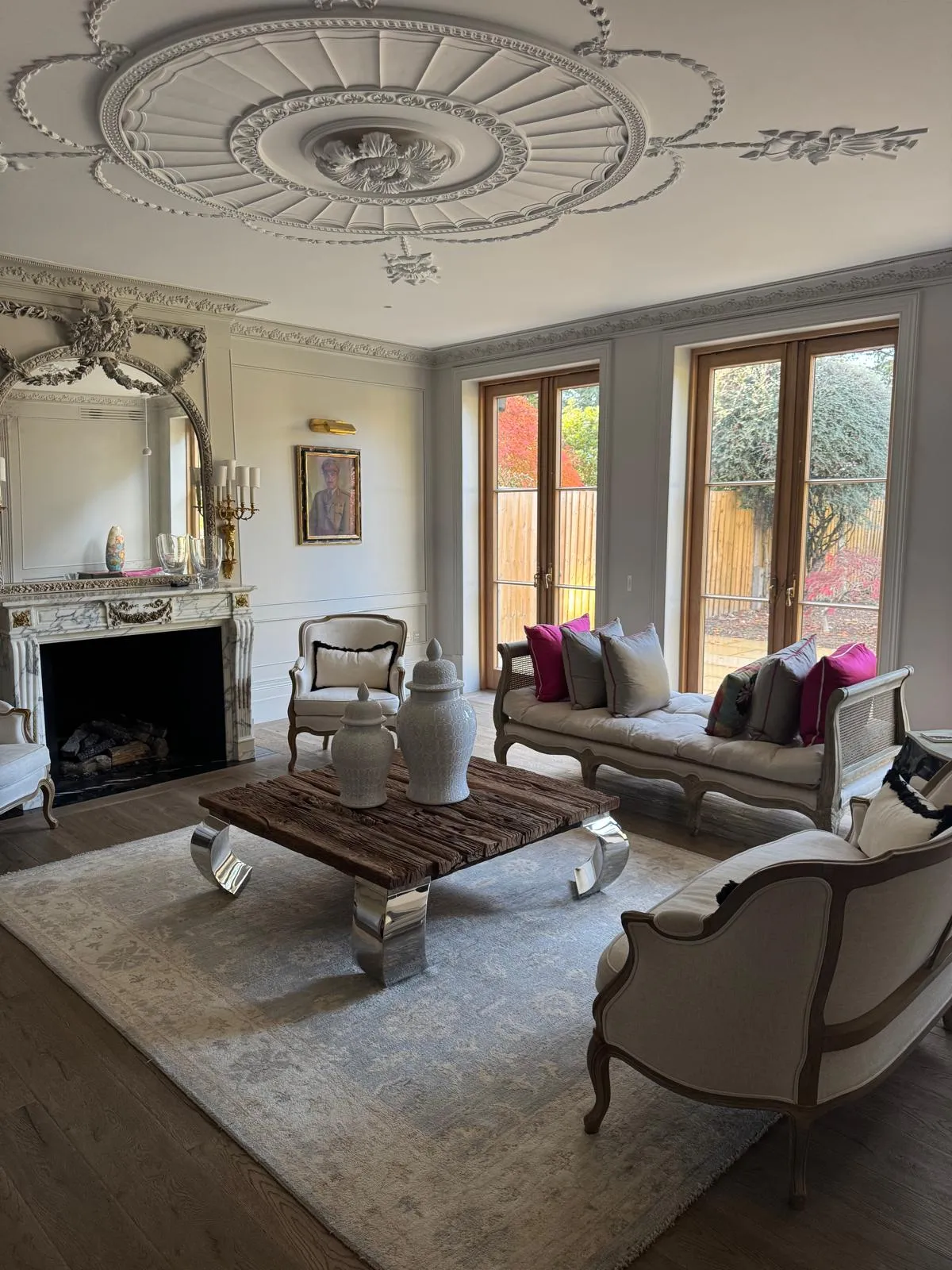
A London townhouse presents a particular set of renovation challenges that do not arise in the same way with smaller properties. Four, five or six storeys of accommodation means a long vertical run of services — water, drainage, electricity, gas — that have to be co-ordinated across every level. Staircase and landing proportions, the circulation between floors, and the acoustic separation between levels all carry more weight in a tall, narrow building than in a wider, lower one.
Townhouses in London are predominantly Victorian or Edwardian in origin, though Georgian examples exist in significant numbers across certain boroughs, and some later-century terraces share the same basic arrangement. Many have been subdivided into flats at some point and subsequently recombined, which adds layers of previous alteration — some of them poorly executed — to the existing fabric.
What this includes
- Full structural assessment across all storeys, including party walls and intermediate floor structures
- Layout reconfiguration: removing, relocating or inserting partitions across multiple floors
- Steel and structural works where load-bearing elements are altered
- Full services installation or replacement: heating risers, soil stack, electrical distribution across all floors
- Staircase repair, replacement or reconfiguration — including fire-safety compliance where applicable
- Insulation: roof, party walls, and floors where appropriate
- Plastering and screeding floor by floor
- Joinery throughout: doors, skirtings, architraves, built-in storage, window seats and alcove units
- Kitchen, bathrooms and utility rooms across multiple levels
- Internal and external redecoration
Common considerations
Programme sequencing across floors. Working across multiple storeys means that trades need to be carefully sequenced to avoid conflicts. First-fix services work that cuts through floors on one level affects the ceiling below; structural works on one floor have implications for the floor above. A well-structured programme manages these dependencies explicitly, rather than working floor by floor in isolation.
Staircase and means of escape. In a multi-storey property, the staircase is a means of escape in the event of fire. Building regulations place specific requirements on stair dimensions, headroom, balustrade heights and — particularly relevant if the layout is altered — protected staircase enclosures. Early engagement with building control is advisable where the layout is changing substantially.
Services routing. In a townhouse, service runs are long. Poorly planned pipework and cable routes create ongoing maintenance difficulties and can require extensive intrusive access to repair. Planning the routing of all services at design stage — before walls are opened — pays dividends over the life of the building.
Basement and lower-ground-floor levels. Many London townhouses have a semi-basement or basement level, sometimes previously used as a kitchen or utility space. These areas are prone to damp, limited in natural light, and sometimes structurally complex. Where a basement level is to be retained as habitable space, it warrants specific consideration of waterproofing, ventilation and natural light.
Neighbourly considerations. A multi-storey townhouse renovation is a significant undertaking that will have an impact on adjacent properties. Party wall notices should be served at the appropriate stage, scaffold licences obtained where required, and — where the programme is long — it is worth considering how the site is managed to minimise impact on the immediate neighbourhood.
How we approach it
We plan townhouse renovations floor by floor and system by system before work starts, producing a programme that makes the sequencing of trades explicit. This is especially important in tall buildings where each floor affects those above and below it. A dedicated project manager oversees the site throughout, and all trades are co-ordinated through us rather than managed separately by the client.
Our renovation process sets out in detail how we handle projects of this scale from initial survey to handover. The renovation costs guide explains what drives cost in a project of this type; townhouse renovations vary considerably in budget depending on the number of storeys, the extent of structural work and the specification of finishes. See our projects page for examples of whole-house work.
Common questions
How long does a townhouse renovation take?
A full renovation of a four-to-five-storey townhouse is a substantial programme, and the duration depends on the extent of structural works, the number of bathrooms and service points, and the complexity of the finishes specified. Indicatively, projects of this type should be planned across a number of months, and potentially longer where bespoke joinery, structural works or specialist finishes are involved. We provide a detailed programme at tender stage.
Can we combine the renovation with a loft conversion or extension?
Yes — combining a whole-house renovation with a loft conversion or home extension in a single programme is usually more cost-effective than undertaking these as separate projects, as scaffold, access and disruption are consolidated, and services co-ordination happens once. There are planning and structural implications that need to be addressed in the design stage.
What happens to access and deliveries on a narrow London street?
Access and logistics are a practical reality for almost all London townhouse renovation projects. We assess the access position — road width, parking restrictions, skip and delivery permit requirements — at pre-contract stage and factor this into the programme and the cost plan. Skip permits and scaffold licences are arranged through the appropriate local authority, and deliveries are planned to avoid unnecessary obstruction.
To discuss your townhouse project, contact us to arrange an initial consultation.
Initial Consultation
Planning works to your London property?
Tell us about the property, the proposed work and your preferred timescale. We will review the information and arrange an initial conversation where the project appears suitable.