Construction
Structural Alterations in London
Structural alterations — removing walls, inserting steel beams, forming new openings or carrying out basement works — are among the most technically demanding elements of any renovation project, and the ones where the consequences of poor execution are most serious.
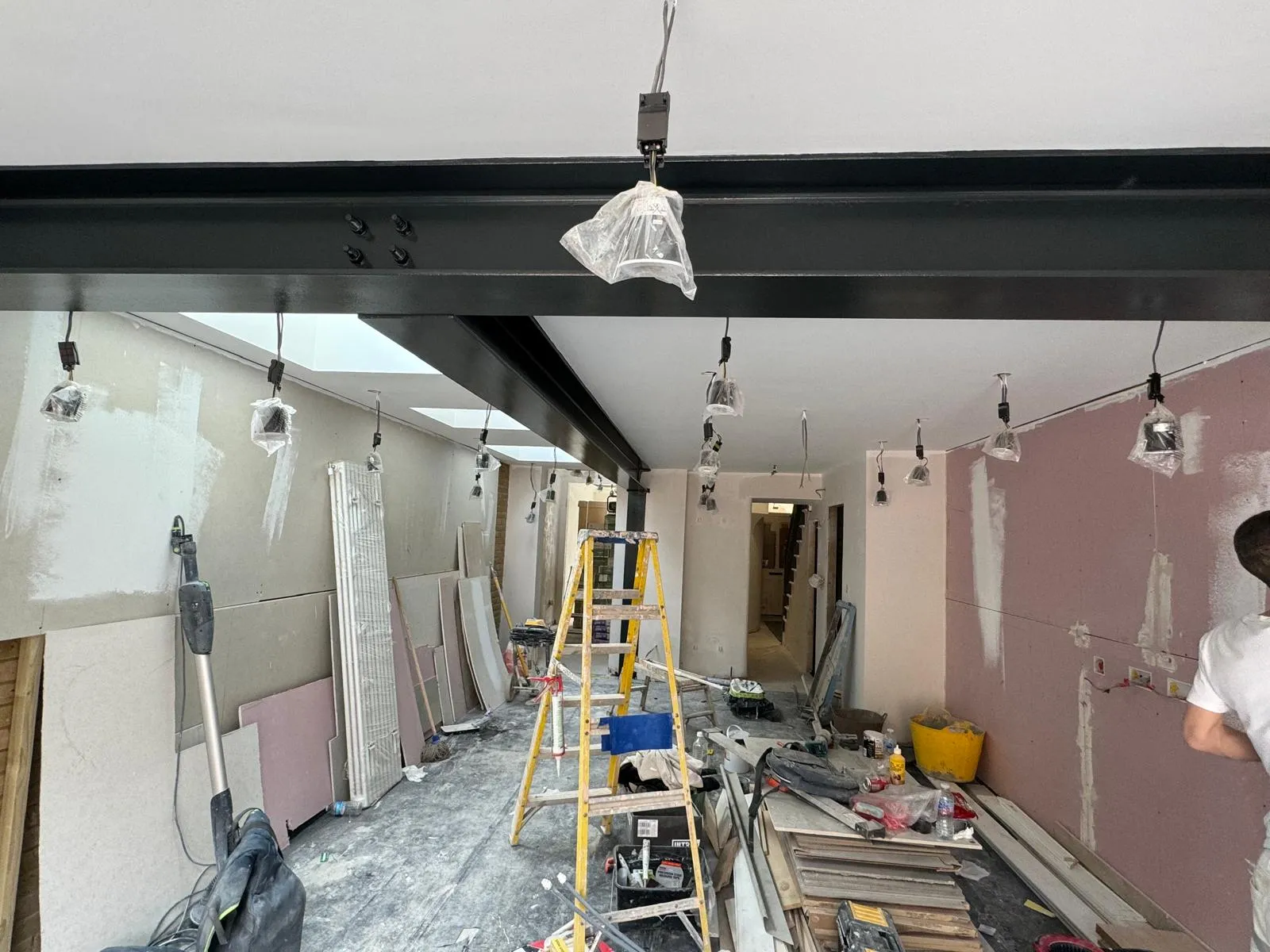
Structural alterations sit at the intersection of engineering, construction and regulatory compliance. Whether the work involves opening up a ground-floor plan, widening a doorway into a load-bearing wall, installing a steel frame for a loft conversion, or excavating and underpinning a basement, it requires a level of technical rigour that goes beyond general building work. The load paths in an existing building are not always obvious, and assuming a wall is non-structural without proper assessment has caused serious problems in properties across London.
The regulatory framework for structural works also carries particular weight. Building control approval is required for structural alterations, and party wall legislation applies wherever work affects a shared wall or structure. These are not bureaucratic formalities: they are mechanisms that protect the structural integrity of the building and the interests of affected neighbours.
What this includes
- Load-bearing wall removal, partial removal, or new opening formation
- RSJ and steel beam installation, including padstones, temporary propping and structural make-good
- Chimney breast removal with structural support above
- Structural openings between floors: new staircase apertures, floor penetrations
- Party wall works: exposed and shared wall alterations, foundation works close to boundaries
- Underpinning and basement construction: excavation, waterproofing, retaining structure
- Structural floor repairs: replacement of failing joists, insertion of new trimmer arrangements
- Lintels: replacement of failed or undersized lintels over windows and doorways
- Building control applications, inspections and sign-off management
- Co-ordination with structural engineers, party wall surveyors and specialist subcontractors
Common considerations
Structural engineer involvement. All structural alterations of substance require the input of a chartered structural engineer. The engineer assesses the existing structure, designs the appropriate steelwork or concrete solution, produces drawings for building control, and specifies the propping and sequencing requirements for the work. We co-ordinate with the engineer throughout, but their appointment is a prerequisite of any structural work, not an optional addition.
Building control. Structural alterations require building control approval — either through a local authority building control inspector or an approved inspector. Full plans approval (submitting drawings before work starts) is the route we recommend for structural works, as it establishes the compliance position before the builder starts on site. Building notices are insufficient for works of this nature. Building control inspections at critical stages — steel installation, connection details, concrete pours — are a standard part of our process.
The Party Wall etc. Act 1996. Works that involve or affect a party wall — the wall shared with a neighbouring property — trigger obligations under the Party Wall etc. Act 1996. This applies to notifiable works on or adjacent to the party wall, to excavations within prescribed distances of neighbouring foundations, and to work on a party structure. Notices must be served on adjoining owners before work begins, and where they do not consent, party wall surveyors are appointed to agree an award. The timescales involved — a minimum of two months in some cases — should be factored into the programme from the outset.
Temporary propping. Removing a load-bearing wall is not a question of simply taking the wall down. The load it carries must be transferred to temporary propping before the wall is removed, and the permanent steel or beam must be installed and properly bedded before propping is struck. Sequence matters, and adequate propping must be in place for as long as required. We do not accelerate this process.
Basement and underpinning works. Basement excavation and underpinning are technically complex and involve specific risks — to the structural stability of the existing building and to neighbouring structures. These works require careful engineering design, appropriate waterproofing specification, and specialist subcontractors. Planning permission is additionally required for the creation or enlargement of basement accommodation in most London boroughs, and there may be specific local planning policies that constrain what is permissible.
How we approach it
We do not commence structural works until the engineering design is complete, building control approval is in place, and party wall obligations have been discharged. This is not simply our preference — it is the only responsible way to manage works of this kind. Our renovation process sets out how structural works are sequenced within a broader renovation programme and how we manage the regulatory steps from start to completion.
On costs, structural alterations vary considerably depending on the nature of the work, the size of the beam or steel required, access constraints on site, and the condition of the existing structure. The renovation costs guide provides a framework for understanding what drives cost in projects of this type. Structural alterations are frequently carried out as part of a broader renovation — see our full house renovation service for how they sit within a complete project programme.
Common questions
How do I know whether a wall is load-bearing?
The honest answer is that you cannot tell definitively without a structural engineer’s assessment. Walls that run perpendicular to floor joists, walls that support loads from floors or roofs above, walls that carry chimney stacks, and walls at ground-floor level in a multi-storey property are all candidates for being load-bearing — but there are exceptions in both directions. The cost of an engineer’s assessment is modest in the context of the overall project and removes any uncertainty before a wall is touched.
What is involved in getting building control approval?
For structural works, we recommend full plans approval: detailed drawings prepared by the structural engineer are submitted to building control before work starts. The building control body reviews the proposals and issues an approval notice (or requests amendments). On site, the inspector carries out inspections at key stages — propping, steel installation, concrete pours — and issues a completion certificate when all work is satisfactorily complete. We manage this process and ensure that the required inspections are called at the right times.
How long does the party wall process take?
Timescales depend on the adjoining owner’s response to the notice. An adjoining owner who consents in writing (a party wall agreement by consent) allows work to proceed without further formality. Where they do not consent, or do not respond within the statutory period, a surveyor is deemed dissented and an award must be agreed before work affecting the party wall can begin. The award process typically takes several weeks once surveyors are appointed, but the overall timeline — including serving notice and awaiting response — means that party wall matters should be initiated as early as possible, often at the design stage.
To discuss structural alterations to your property and what the process involves, contact us.
Initial Consultation
Planning works to your London property?
Tell us about the property, the proposed work and your preferred timescale. We will review the information and arrange an initial conversation where the project appears suitable.